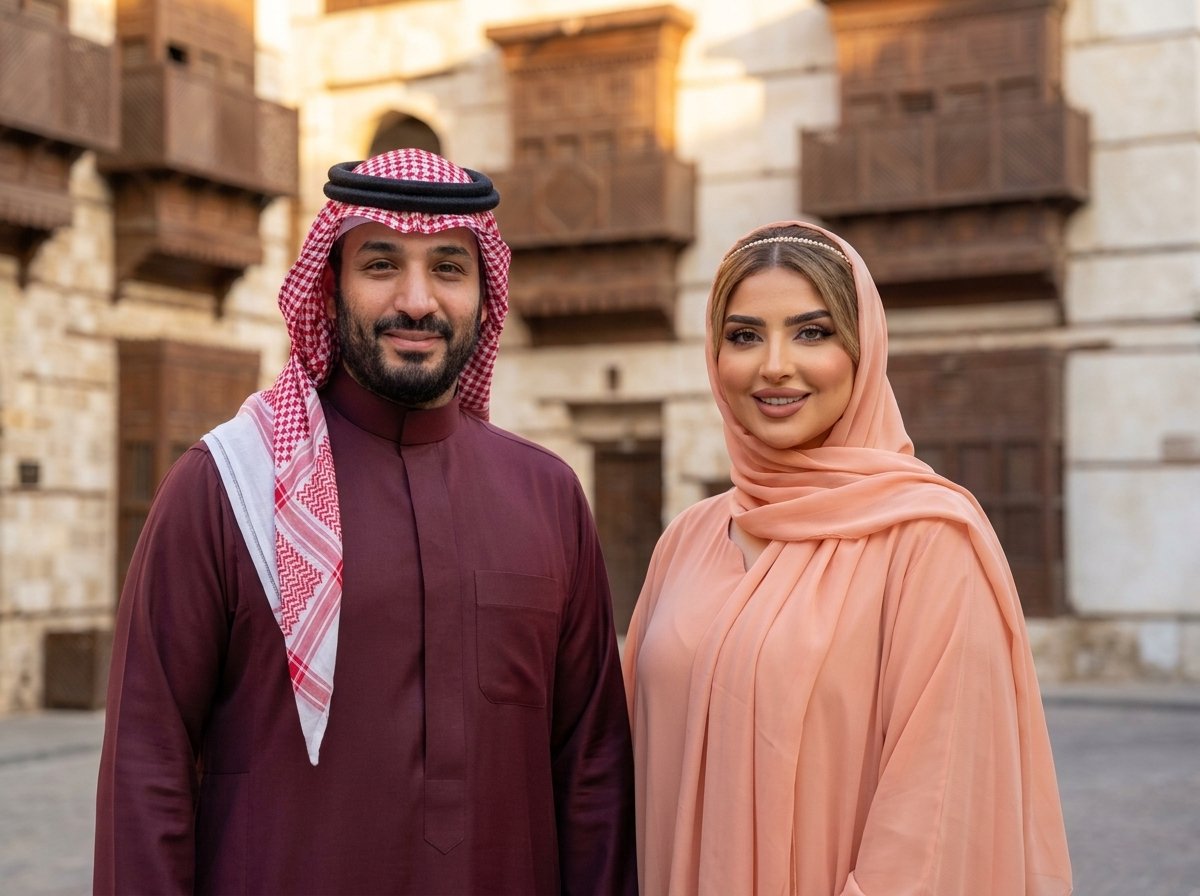
Mohammed bin Salman bin Abdulaziz Al Saud, widely known as MBS, is the Crown Prince and Prime Minister of Saudi Arabia. He is one of the most influential political figures in the Middle East and has become closely associated with Saudi Arabia’s ambitious plans to transform its economy and society.
Born into the Saudi royal family, Mohammed bin Salman rose rapidly through the country’s political system. His leadership has been particularly associated with Saudi Vision 2030, an economic and social transformation program designed to reduce the Kingdom’s dependence on oil, expand new industries, attract investment, and create opportunities for a young population.
Early Life and Family Background
Mohammed bin Salman was born on 31 August 1985 in Riyadh, Saudi Arabia. He is the son of King Salman bin Abdulaziz Al Saud and Princess Fahda bint Falah Al Hathleen.
As a member of the Al Saud royal family, he grew up in an environment closely connected with Saudi Arabia’s government and public affairs. His father eventually became King of Saudi Arabia, giving Mohammed bin Salman an increasingly important role in the country’s leadership.
He studied law at King Saud University in Riyadh and developed an early interest in government, business, and public administration.
Rise to Political Power
Mohammed bin Salman began gaining significant political influence after his father became King in 2015. He was appointed to important government positions and became increasingly involved in economic, security, and strategic affairs.
In 2017, he was appointed Crown Prince, becoming the heir to the Saudi throne. His appointment marked an important generational shift in Saudi leadership.
He later became Prime Minister of Saudi Arabia, giving him a central role in managing the country’s government and implementing major national policies. Saudi government sources continue to identify him as Crown Prince and Prime Minister.
Saudi Vision 2030
Perhaps the most important initiative associated with Mohammed bin Salman is Saudi Vision 2030.
Launched in 2016, Vision 2030 seeks to transform Saudi Arabia into a more diversified and globally competitive economy. The strategy focuses on three broad themes: creating a vibrant society, developing a thriving economy, and building an ambitious nation.
A major goal is reducing the Kingdom’s economic dependence on oil revenues. Vision 2030 promotes investment in tourism, technology, entertainment, manufacturing, renewable energy, culture, and other industries.
The program also emphasizes Saudi Arabia’s geographic position between Asia, Europe, and Africa and aims to strengthen the Kingdom as a global center for investment, trade, and business.
Economic Transformation
Under Mohammed bin Salman’s leadership, Saudi Arabia has pursued major economic reforms. The government has encouraged private-sector development and sought to attract international companies and investors.
The Public Investment Fund (PIF) has become an important instrument in this transformation. It has invested in projects and companies across numerous sectors while supporting major domestic developments.
The Kingdom’s strategy is intended to create new sources of economic growth and employment while preparing for a future in which oil is no longer the only major driver of national prosperity.
NEOM and Mega Projects
One of the most internationally recognized projects connected with Saudi Arabia’s transformation is NEOM.
Announced in 2017, NEOM was presented as a futuristic region focused on technology, innovation, sustainability, and new forms of urban development. The Public Investment Fund described the project as being backed by more than $500 billion from Saudi Arabia, the PIF, and other potential investors.
NEOM is part of a wider collection of Saudi mega-projects designed to expand tourism, entertainment, infrastructure, and investment. These projects have helped create a new international image for Saudi Arabia and have attracted significant global attention.
Social and Cultural Changes
Mohammed bin Salman’s leadership has also been associated with significant social and cultural changes within Saudi Arabia.
Saudi Arabia has expanded entertainment and cultural activities, including concerts, sporting events, festivals, and international events. These developments are connected to the broader objectives of Vision 2030, which seeks to improve quality of life and create a more diverse society.
The government has also promoted opportunities for women in education, employment, business, and public life. These changes have received considerable international attention and are among the most visible aspects of the Kingdom’s transformation.
Technology and Artificial Intelligence
Technology has become another important part of Saudi Arabia’s development strategy.
Saudi Arabia has invested heavily in digital transformation, data infrastructure, and artificial intelligence. Mohammed bin Salman chairs the board of the Saudi Data and Artificial Intelligence Authority (SDAIA), reflecting the importance placed on emerging technologies.
In 2026, Saudi Arabia designated the year as the Year of Artificial Intelligence, with officials describing the initiative as part of the Kingdom’s ambition to strengthen its position in advanced technology and global AI discussions.
These efforts demonstrate that Saudi Arabia’s transformation is not limited to tourism and entertainment. Technology and innovation are increasingly central to its long-term economic strategy.
International Influence
Mohammed bin Salman has become an important figure in international diplomacy and global economic affairs. Saudi Arabia’s position as a major energy producer, a leading Arab and Muslim country, and an important G20 economy gives its leadership considerable international influence.
During his tenure, Saudi Arabia has continued to strengthen relationships with countries across Asia, Europe, North America, and the Middle East. His government has also sought to increase Saudi Arabia’s role in international investment, energy, technology, and diplomacy.
Recent Saudi government reports continue to show Mohammed bin Salman conducting diplomatic discussions with international leaders and participating in major global affairs.
Leadership Style
Mohammed bin Salman is widely viewed as a leader focused on rapid modernization and long-term national transformation. His approach places strong emphasis on ambitious projects, economic diversification, technological development, and increasing Saudi Arabia’s global profile.
Supporters describe his reforms as necessary for preparing Saudi Arabia for the future and creating opportunities for younger generations. At the same time, his leadership and Saudi government policies have also attracted international criticism and debate, particularly concerning human rights and political freedoms.
Understanding Mohammed bin Salman’s role therefore requires looking at both sides of his leadership: the scale of the reforms taking place in Saudi Arabia and the controversies that have accompanied them.
Personal Life
Mohammed bin Salman married Princess Sara bint Mashour Al Saud in 2008. The couple have children and generally maintain a relatively private family life compared with the public nature of his political career.
Although his official responsibilities occupy much of his public profile, his personal interests have sometimes been connected with Saudi Arabia’s broader development goals, including sports, technology, investment, and cultural projects.
The Future of Saudi Arabia
Mohammed bin Salman’s greatest political challenge is likely to be turning Vision 2030’s ambitious plans into sustainable long-term results.
The transformation of an economy as large and oil-dependent as Saudi Arabia is a complex process. It requires investment, skilled workers, private-sector growth, technological development, and continued international cooperation.
If successful, Vision 2030 could significantly change Saudi Arabia’s economic structure and international position. The Kingdom’s investments in technology, tourism, infrastructure, entertainment, and new industries suggest that its leadership is preparing for a future beyond traditional oil dependence.
Conclusion
Mohammed bin Salman has emerged as one of the defining leaders of modern Saudi Arabia. As Crown Prince and Prime Minister, he has played a central role in shaping the Kingdom’s economic, social, technological, and international direction.
His name is closely connected with Vision 2030, the Public Investment Fund, NEOM, technological development, cultural transformation, and Saudi Arabia’s growing international ambitions.
His leadership remains the subject of both admiration and criticism, but there is little doubt that his policies have placed Saudi Arabia at the center of many major global discussions. As the Kingdom continues pursuing Vision 2030, Mohammed bin Salman’s leadership will remain closely watched by the region and the wider world.